Base Account vs. Parcel Accounts
Last updated: July 26, 2026
What is the difference between a Base vs. Parcel Account?
Parcel accounts are required to ship your orders via parcel to retailers. A retailer may provide their own parcel account for shipping, or they may require you to use your own parcel accounts.
RetailReady requires a base parcel account to be setup in the system to ensure smooth and accurate shipping operations. While a retailer parcel account will be used to pay for shipping costs, your base account may be used for any third-party billing requests related to your orders, such as accessorial fees, address corrections or additional handling. Base accounts can be tied to either a 3PL or a brand, depending on the relationship.
How do I connect my Base Parcel Account?
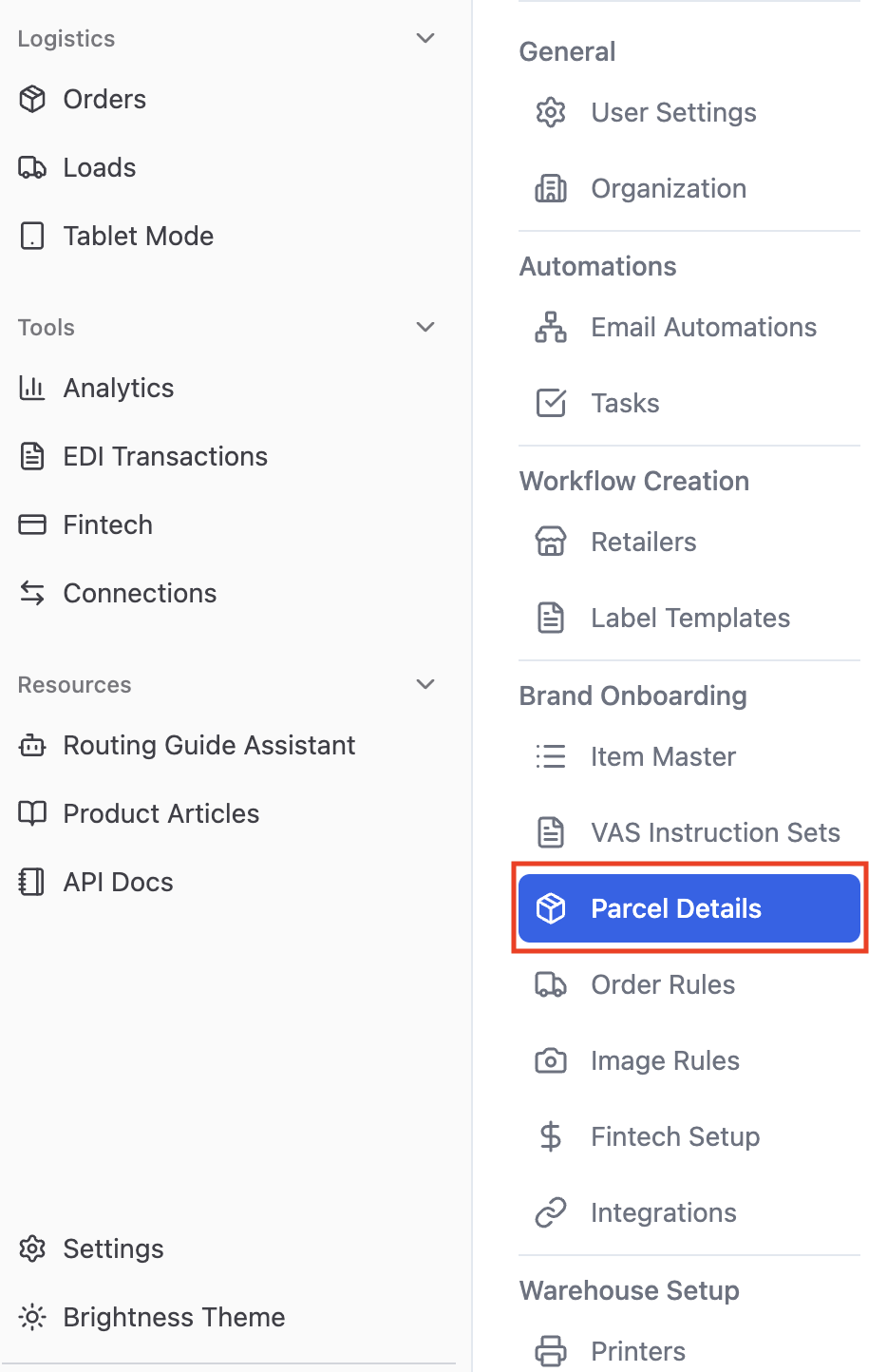
Navigate to Settings -> Brand Onboarding -> Parcel Details in RetailReady.
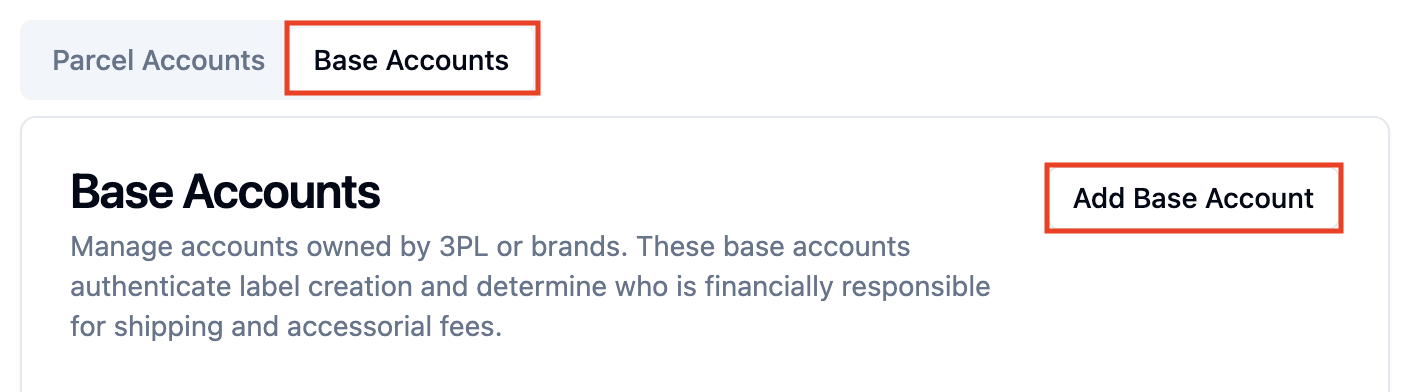
Navigate to the Base Accounts tab, and click 'Add Base Account'.
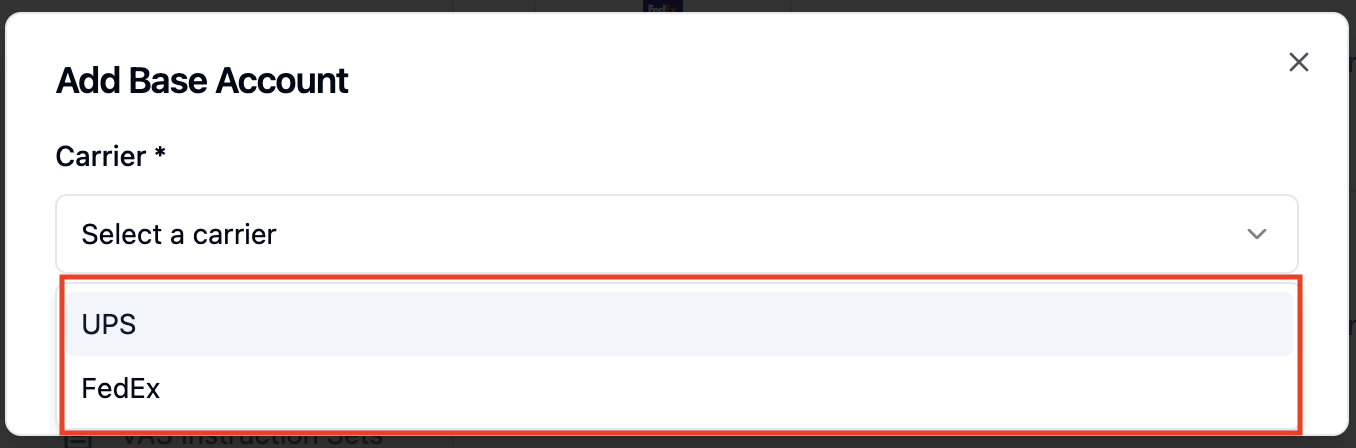
Select either Fedex or UPS as your carrier.
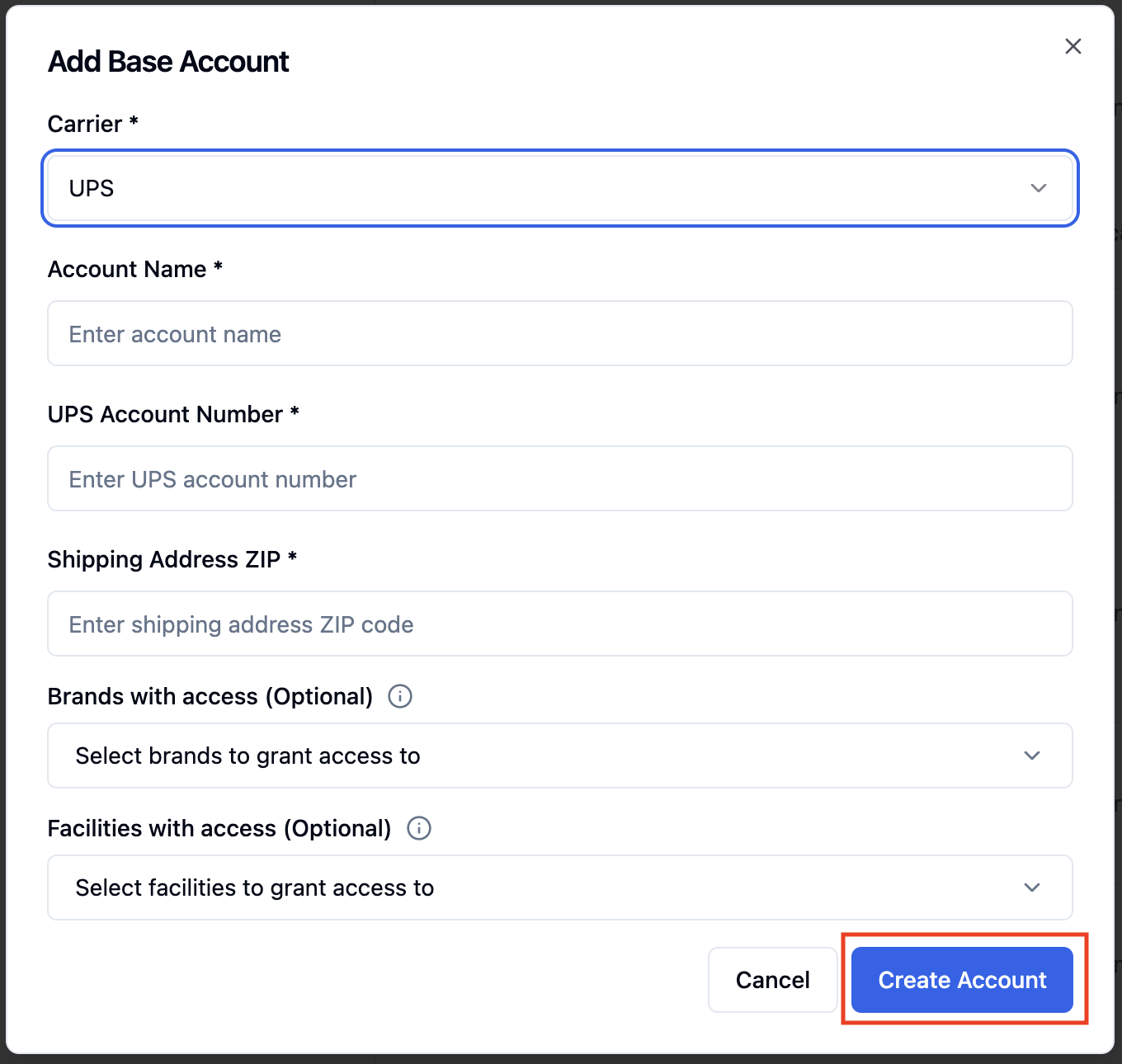
Add in the required carrier information - you should be able to find this information within your Fedex or UPS account online - and then also add the brand(s) and facilit(ies) that you want to use this account for. When complete, click 'Create Account'.
Finally, RetailReady may provide you a URL and ask you to authorize access for Shippo (which RetailReady uses to generate parcel labels) to your account.
How do I connect parcel accounts?
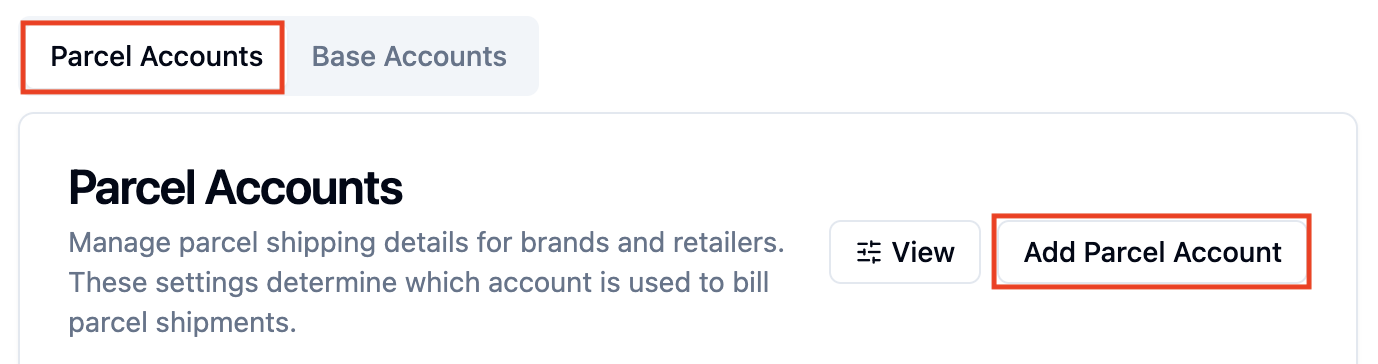
Once a base account is setup, you can add a parcel account for a retailer<>brand connection. Within the Parcel Accounts tab, click 'Add Parcel Account'.
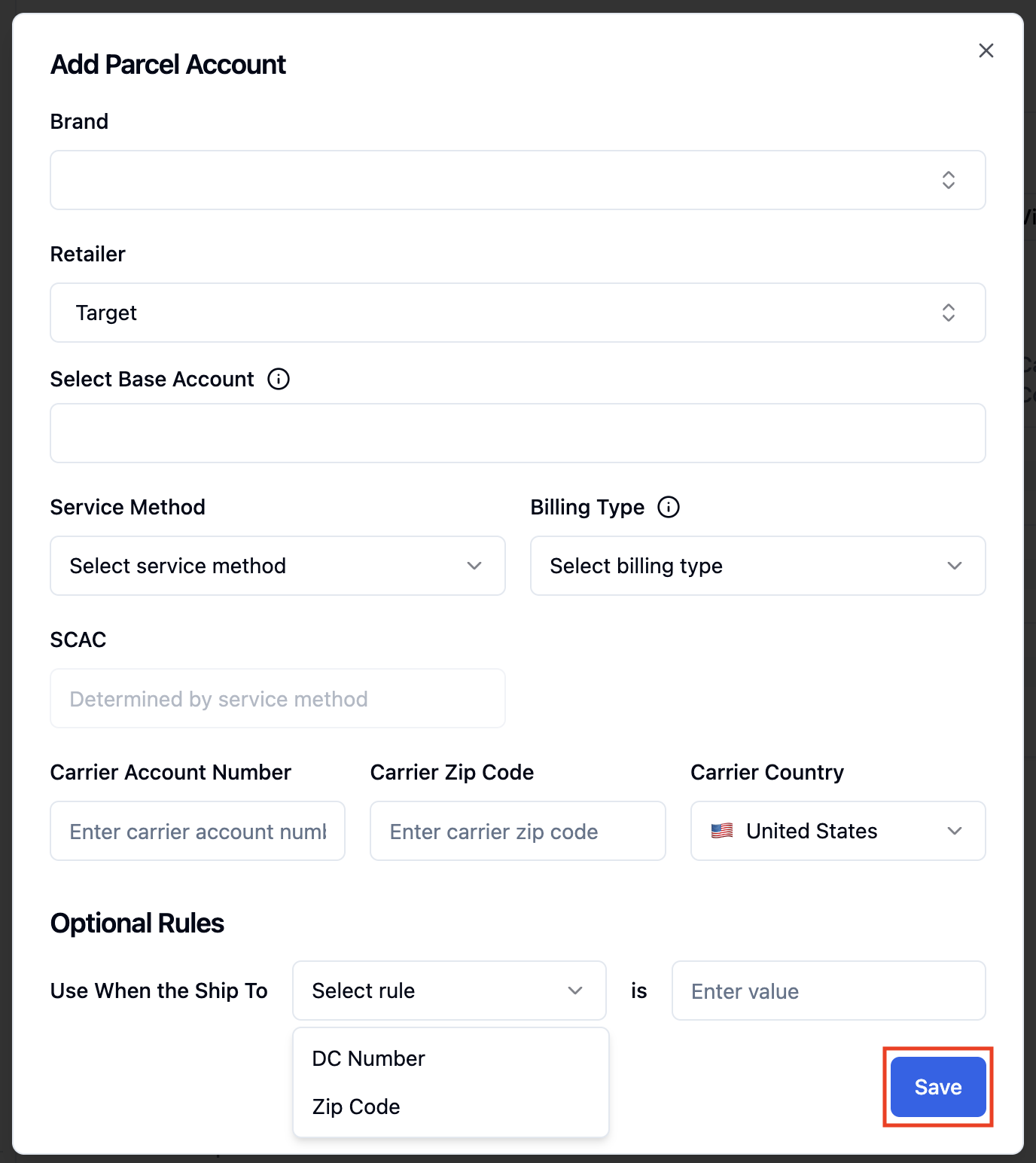
Enter the brand<>retailer connection you want to tie to the parcel account, select the base account that you previously added, and then enter the carrier information for the parcel account for the retailer. You can configure the parcel account to ship for specific DCs or zip codes, and add multiple accounts per brand<>retailer connections. When complete, click 'Create Account'.
Shipping internationally or to Puerto Rico via UPS
If you're shipping internationally or to Puerto Rico via UPS, we recommend enabling Paperless Invoice on your UPS account. This lets commercial invoice data transmit electronically with the shipment, so a printed copy generally isn't required. You can confirm this is turned on in your UPS account under Accounts and Payment > Paperless Commercial Invoice.
How to tell if a shipment was sent paperless
To confirm whether a shipment was sent paperlessly, look for the EDI (Electronic Data Interface) indicator on your UPS label:
If EDI is printed on the label, the commercial invoice data was successfully transmitted electronically.
If you see INV or no EDI marker, the shipment was not eligible for paperless transmission. In that case, print three copies of the commercial invoice and attach them to the package in a clear pouch.